|
|
|
|
|
|
|
To view information and prices,
Click on a product in the table below,
or simply scroll
down to view all
selections.
There are
now 6 ways you can purchase
1.
Shopping Cart 2.
Fax (using
our Order Form, or yours) 3.
Telephone 4. Purchase with PayPal
5. Secure Order Form
6. Post - P.O Box 136,
Mt Druitt N.S.W 2770
Australia (CLICK
HERE for more details)
|
We accept |
 |
|
AUSTRALIAN CUSTOMERS: Prices do not include GST, it will be added during the Checkout stage.
Medical and Science Media ship worldwide |
|
 |
|
|
|
|
|
|
|
TOP |
 |
The Biology Classics
Paramecium, Hydra,
Planaria, and Daphnia |
| DVD -
31 minutes |
Shipped in 8 days |
|
|
|
|
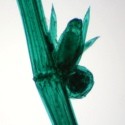
The classics acquaint students with four
organisms
often studied in biology.
This program introduces students to four
organisms we call the Biology Classics, which are featured in most
biology textbooks. Studying these “classics” broadens our concept of
what it means to be alive. Structure, behavior, feeding,
reproduction, and ecology are observed in each organism, allowing
students to compare them. Detailed study guides that can be printed
for student use are provided. (2006)
Paramecium
Observations show how Paramecium moves, feeds, digests,
assimilates nutrients, achieves water balance, deploys defensive
weapons, reproduces, and engages in the sexual exchange of genetic
material. The narrated observations utilize state-of-the-art
microscopy-techniques to present a compelling new picture of
Paramecium’s life.
Hydra
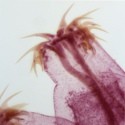
Observations of Hydra show feeding behavior, detailed microscopy
of stinging cells used in capturing prey, two digestive processes
(cellular and extracellular), locomotion, reproduction by budding,
development sex organs, and symbiotic guests, both external and
internal.
Planaria
The cross-eyed flatworm, Planaria, is both scavenger and
predator depending upon opportunity. Observations show food-seeking
behavior, the flatworm’s feeding method, locomotion (produced by a
carpet of cilia), internal anatomy, and reproduction through the
remarkable process of regeneration.
Daphnia
Daphnia is a classic study in arthropod behavior and anatomy. In
living subjects we examine: eye, brain, jaws, intenstine, swimming
legs with gills, its beating heart, and two kinds of eggs: those
that hatch directly into female daphnia, and resistant eggs that
carry the species through periods of freezing and drying.
|
|
|
TOP |
 |
Visualising Cell Processes |
| DVD -
130 minutes |
Shipped in 8 days |
|
|
|
|
Visualising Cell Processes
combines the five titles, Cells & Molecules, Cell Movement and
Transport, Photosynthesis & Cellular Respiration, DNA
& Cell Reproduction, and The Genetic Code. Information on
these five titles can be found under their respective titles on this
page. (2002)
|
Overview of Living Cells
A Variety of Cells
Cell Organization
The Rise of Bacteria
Cyanobacteria & Oxygen
Eukarya Gets its Start
DNA Stucture and Cell Division
Chromosome Condensation
Mitosis Cytokinesis Meiosis
Nucleotide Structure & Bonding
Replication Enzymes
Replicating the Strands
The Twisting Problem
Proofreading & Repair
Genetic Code and Protein Synthesis
The Protein Nature of Life
Protein Structure Transcription
Translation & Protein Synthesis
Gene Regulation in Prokaryotes
Mutations
Introns & Exons
Organic Molecules
Carbon Bonding
Lip Structure
Protein Structure
Nucleic Acid Structure
Carbohydrate Structure
Cell Movement & Transport
The Plasma Membrane
Osmosis Phagocytosis
Transport Proteins Pinocytosis
Golgi Function
Receptor-Mediated Endocytosis Microtubules
Lysosomes & Digestion Cilia
Motor Proteins
Photosynthesis
Chloroplast Structure
Light Trapping by Chlorophyll
The Light Dependent Reactions
Light Independent Reactions
Cellular Respiration
Glycolysis
Fermentation
Mitochondria
Krebs Cycle
Electron Transport Chain
ATP
Viruses and HIV
T-4 Bacteriophage
HIV Structure & Life Cycle
|
|
|
|
|
TOP |
Cells and Molecules
is organized into short-play
learning modules, for concise
instruction.
1. A Variety of Cells (1:25)
Compares prokaryotes (spirilliform bacteria) and a eukaryote (small
amoeba with prominent nucleus) and shows some of the diverse types
of cells found in animals and plants.
2. Prokaryotes
(00:40) Shows a Daphnia carcass undergoing bacterial decomposition; spiral
bacteria 12 micrometers in length (from nutrient-rich pond water); a variety of
decomposer bacteria, size range: 2-40 micrometers; Oscillatoria (from slow
stream, near organic waste source).
3. Flagellates
(00:38) Scenes include: Euglena (from pond sample), 60 micrometers (note the
disc-shaped paramylum bodies used for starch storage); Peranema (from aquatic
vegetation) 70-100 micrometers; Eudorina (pond plankton) 300 micrometers;
Trichonympha (termite gut symbionts) 300-400 micrometers.
4. Amoebas
(00:40) Organisms shown are: Amoeba (pond vegetation) 200 to 400 micrometers;
Vahlkampfia (small amoeba from pond bottom), 20 micrometers; Arcella (pond
scum), 80 micrometers.
5. Ciliates
(1:00) Shows Paramecium (decomposing pond vegetation) 170 micrometers; Stentor
(pond vegetation) 200 to 600 micrometers (the green coloration of the first
species shown is due to symbiotic algae living in its cytoplasm); Euplotes (pond
vegetation, bottom ooze) 70 to 150 micrometers (Euplotes represents a large
group of ciliates that possess tendril-like cirri composed of fused cilia);
Vorticella (on duckweed root) cells are about 70 micrometers across.
6. The Endosymbiotic Theory (1:10) A eukaryotic
cell's energy transforming organelles, chloroplasts and mitochondria, appear to
have originated as symbiotic prokaryotes.
7. Cell Organization (1:39) Provides an overview
of the primary cell organelles: plasma membrane, nucleus, endoplasmic reticulum,
Golgi bodies, lysosomes, mitochondria, and chloroplasts.
8. Overview of Organic Molecules (3:39) This
module shows basic carbon bonding patterns, including the assembly and enzymatic
breakdown of polymers.
|
|
|
TOP |
 |
|
Cell Movement and Transport |
| DVD - 15
minutes |
Shipped in 8 days |
|
|
|
|
Cell Movement and Transport is organized into
short-play
learning modules, for concise instruction.
1. Structure and Behaviour of the Plasma Membrane
(00:57) Phospholipid bi-layers behave as a two dimensional fluid surrounding the
cell.
2. Osmosis
(2:25) Differences in water-potential between the cell interior and its
surroundings affect the net movement of water into and out of a cell.
3. Transport Proteins (00:54) Biological
membranes swarm with proteins that act as gates and channels, allowing
substances to enter and leave cells.
4. Phagocytosis
(1:39) Many types of free-living cells engulf food for digestion within food
vacuoles.
5. Pinocytosis
(00:25) Cells bring in nutrient fluids by incorporating them into small
vesicles.
6. Receptor Mediated Endocytosis (00:47)
Receptor proteins on the cell surface trap specific types of molecules that are
taken in by endocytosis.
7. Golgi Function (00:38) The Golgi apparatus is
a folded stack of membranes that sorts and packages cell products.
8. Lysosomes and Hydrolytic Digestion (1:20)
Demonstrates the action of lysosomes Ñ organelles that hold and transport
hydrolytic enzymes.
9. Microtubules
(1:04) Quickly assembling and breaking down, microtubules create support
structures and function in many kinds of cell movement.
10. Cilia
(1:10) An amazing molecular hook and claw action drives the ciliary beat.
11. Actin and Myosin Motor Proteins (1:15) The
interaction between these two proteins moves cell particles and produces the
contraction of muscles. | |
|
TOP |
 |
|
Photosynthesis
and Cellular Respiration |
| DVD - 15
minutes |
Shipped in 8 days |
|
|
|
|
Photosynthesis and Cellular Respiration
is organized into
short-play learning modules, for concise instruction.
Cellular Respiration:
1. Glycolysis and Fermentation (2:17) Glycolysis produces a net gain
of two ATPs from a molecule of glucose, breaking it down into pyruvic acid.
2. Mitochondrion Structure (1:36) The internal structure of a
mitochondrion can be understood in terms of compartmentalizing ATP production.
3. Aerobic Respiration
(1:36) This module presents an overview of how energy is extracted from organic
molecules using oxygen.
4. Krebs Cycle
(1:03) Animation shows key steps in the energy extracting reactions that occur
in the matrix of a mitochondrion.
5. Electron Transport Chain (1:16) Driven by oxygens thirst for
electrons, proteins on the inner membrane pump hydrogen ions into the inner
membrane space, creating conditions for ATP synthesis.
6. ATP Synthesis
(00:51) Enzyme complexes on the inner mitochondrial membrane use a
chemosynthetic process to synthesize ATP from ADP.
Photosynthesis:
7. Chloroplast Structure
(00:44) The substructure of a chloroplast reflects its photosynthetic functions.
8. Light Trapping by Chlorophyll (00:55) Chlorophyll molecules form
complexes that feed energized electrons into an electron transport chain.
9. The Light-Dependent Reactions of Photosynthesis
(1:26) These reactions produce ATP and NADPH, the energy carriers that drive
biosynthesis.
10. The Light-Independent Reactions of Photosynthesis (1:18) A cycle
of reactions creates PGAL, the universal building block of sugars and starches. |
|
|
TOP |
 |
|
DNA Replication
and Cell Reproduction |
| DVD - 15
minutes |
Shipped in 8 days |
|
|
|
|
DNA and Cell Reproduction is organized
into
short-play
learning modules, for concise instruction.
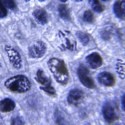
1. Mitosis: Chromosome Condensation (1:04) Shows the remarkable
packaging of DNA as it condenses into chromosomes.
2. Mitosis: Stages (2:24) Reviews the chromosome patterns seen at
different stages of the mitotic cycle.
3. Cytokinesis (00:30) Shows the basic differences between protist,
animal and plant cell division.
4. Meiosis (1:00) Shows how chromosome sorting and crossing over
introduces new gene combinations into a population, while achieving the
reduction of chromosomes to the haploid number.
5. Nucleotide Structure and Bonding (1:26) Illustrates DNA chemistry,
the basis for encoding genetic information in molecular structure.
6. Replication Enzymes
(1:02) Demonstrates the chemical steps in DNA replication and shows how each
step is accomplished by means of an enzyme.
7. Replicating the Leading and Lagging Strands (1:57) Because the two
strands of DNA must be replicated in opposite directions, two different
replication strategies are used at each replication fork.
8. Topoisomerase and the Twisting Problem (00:43) To prevent
tightening of the helix as it is opened, an enzyme nicks the strand and allows
it to rotate, relieving tension and permitting the replication fork to advance.
9. Proofreading and Repair
(00:53) Damage to DNA is common, but a fleet of repair enzymes races over the
DNA and corrects errors. | |
|
TOP |
 |
|
The Genetic Code |
| DVD - 15
minutes |
Shipped in 8 days |
|
|
|
|
The Genetic Code video is organized into short-play
learning modules,
for concise instruction.
1. The Protein Nature of Life
(1:25) Compares prokaryotes (spirilliform bacteria) and a eukaryote (small
amoeba with prominent nucleus) and shows some of the diverse types of cells
found in animals and plants.
2. Protein Structure (0:36) This module shows how 20 amino acids can
produce an almost infinite number of proteins and how the shape of a protein is
achieved.
3. Transcription (1:37) Shows how the DNA code is transcribed onto
nucleotides of mRNA. The mRNA strands are then shown migrating into the
cytoplasm where they are used as templates for synthesizing proteins.
4. Translation and the Protein Synthesis (1:31) Animates the functions
of ribosomal RNA and transfer RNA in the translation of mRNA into a protein.
5. Gene Regulation in Prokaryotes (1:46) Production of the enzyme
beta-galactosidase by lactose-digesting bacteria creates a model of the first
gene regulation mechanism to be clearly understood Ñ the lac operon.
6. Classes of Eukaryote DNA
(1:08) Not all of a cells functional DNA codes for large proteins. Short
repeated sections code for small ones in high production, such as histones,
while other repeat sections from the caps and centromere of chromosomes.
7. Exons and Introns (1:25) One of the great surprises in molecular
biology was the discovery that up to 90 percent of a cells DNA is silent.
8. Mutations (1:44) This module illustrates several types of mutations
that occur in DNA. Frame-shift mutations are the most damaging, whereas point
mutations are a potential source of variety for evolutionary processes. | |
|
TOP |
 |
|
Inside
the Living Cell |
|
DVD - 50 minutes |
Shipped in 8 days |
|
|
|
|
The menu structure offers over 30 learning chapters that
can be discussed and repeated as needed to assure that
everyone is up to speed on the content. The DVD-ROM contains a
Teaching Guide (PDF format) for each topic. ©2004, Subtitle
Enabled
The Cell - Unit of Life
The Discovery of Cells,
Cell Structures, Organelle Function, Cell Varieties, The
Chemistry of Life
The Outer Envelope
Membrane Structure, Osmosis,
Transport Proteins, Active Transport, Cell Eating, Cell
Drinking, Receptor Proteins
How Cells Obtain Energy
ATP and Chemical Energy,
Mitochondria, Aerobic Respiration, Chloroplasts, The Reactions
of Photosynthesis
How Cells are Controlled
The Protein Nature of
Life, Enzymatic Reactions, Amino Acids and DNA, How Proteins
are Built, Turning on Genes
How Cells Reproduce
DNA Structure of Replicating
DNA, Mutations Change the Genetic Code, Proofreading and
Repair, The Stages of Mitosis 2006 |
|
|
TOP |
|
Cells as microscopic building blocks of all animals and plants. The cell wall,
cytoplasm, chloroplasts, nucleus and cell vacuole in plant cells. Structure of
human cheek cells and comparison with plant cell structures.
|
|
|
|
TOP |
 |
|
Food |
| DVD - 14
minutes |
Shipped in 8 days |
|
|
|
|
The basic biochemistry, origin, function of the major food classes and
consequences of their deficiency in the diet. The relationship between society
and diet. Obesity and malnutrition. |
|
|
TOP |
 |
|
Fungi and
Bacteria |
| DVD - 10
minutes |
Shipped in 8 days |
|
|
|
|
The importance of fungi and bacteria in industry, health and society.
Structure and function of fungal hyphae and bacteria. Harmful and beneficial
effects of bacteria and fungi. |
|
|
TOP |
 |
|
Hormones in Plants and Animals |
| DVD - 11 minutes |
Shipped in 8 days |
|
|
|
|
Physiological effects of hormones. Endocrine glands: the pancreas and the
function of insulin, the adrenal gland and the function of adrenalin. Sex
hormones. Effects of plant hormones and isolation of growth hormones from maize
coleoptiles.
|
|
|
TOP |
 |
|
Nervous
System |
| DVD - 11 minutes |
Shipped in 8 days |
|
|
|
|
The sensitivity reaction. The eye and ear as receptor organs. The structure of
the nervous system. The reflex action and its importance in preventing injury.
|
|
|
TOP |
|
Science programs on the following topics: Food; Photosynthesis and Leaf
Structure; The Nervous System; Reproduction in the Flowering Plant; Fungi and
Bacteria; Cell Structure; Hormones in Plants and Animals; Ecosystems. The
programmes are available separately, or on a single video cassette as the GCSE
Biology Series (87 minutes). Each individual programme is approximately 11
minutes long.
|
|
|
TOP |
 |
|
GCSE
Biology Experiments |
|
DVD - 60 minutes |
Shipped in 8 days |
|
|
|
|
Twelve filmed experiments and demonstrations of
practical work designed to test pupils' ability to follow procedural
instructions and to handle biological apparatus and materials.
CONTENTS:
Experiments: The Iodine Test; Benedicts Test; The Biuret Test; The
Emulsification Test; Dialysis; The Presence of Starch in Leaves;
Light and Photosynthesis; Respiration in Yeast; Digestion of Starch
by Amylase; The Effect of Temperature on Amylase. Techniques: The
Light Microscope; Measuring Liquids. A 36 page accompanying booklet
contains teachers' notes and photocopyable worksheets.
|
|
|
TOP |
 |
|
Microscopy
for Biology |
|
DVD - 30 minutes |
Shipped in 8 days |
|
|
|
|
Microscopy for Biology allows teachers to demonstrate aspects
of
microscopy which may otherwise by difficult to show.
The program
is divided into six sections and is composed of original material
and includes footage of advanced equipment such as electron
microscopes, a fluorescence microscope and a cryostat.
CONTENTS:
Part 1: the cellular construction of living things. A
brief history of the compound microscope. The cell theory. Principle
of the light microscope. Part 2:
The light microscope and the limit to its resolving power. The numerical
aperture. Limit to useful magnification.
Part 3: Histology and wax embedding. The use of the microtome and
cryostat. Part 4:
Problems of interpretation. Scale in relation to small objects. Brownian
motion. Movement at low Reynolds numbers. Action of cilia and
flagella. Part 5: Principles of transmission and scanning
electron microscopy. Preparation of material for electron
microscopy. Part 6: Interpretation of electron micrographs.
Introduction to recent developments in microscopy. Suitable for
A-level, AS-level, BTEC and other further and higher education
courses.
|
|
|
TOP |
|
This program describes the discovery of viruses and their
structure, how viruses are studied, how they infect their
hosts and how they replicate. Details are provided on the T-4
bacteriophage and retroviruses such as HIV. The bacteria
section uses compelling microscopy of living bacteria to
examine their structure, physiology, behavior, and the vital
roles these microbes play in the biosphere, including oxygen
production (cyanobacteria), decomposition, nitrogen fixation,
and as parasites as well as helpful symbionts.
Twelve minutes of additional live observation of a variety
of bacteria can be used to introduce or recap the lesson, or
play as visual ambiance during laboratory work. ©2004
Subtitled enabled 45 minutes, 11 narrated modules plus 22
minutes of additional observations. Closed Captioned. (2004)
|
|
|
TOP |
 |
Life's
Three Great Branches:
Archaea, Bacteria and Eucarya |
| DVD -
31 minutes |
Shipped in 8 days |
|
|
|
|
CONTENTS:
The Domains of Life updates the five kingdoms classification scheme
with the latest understanding of life’s organization based on DNA,
fossil, and biochemical evidence, reorganizing all life into three
great branches: Archaea, Bacteria, and Eucarya.
Concise animations and superb microscope footage of primitive cells
show events that shaped life as we know it today. (2006)
Topics:
Self-Replicating Molecules Evolve
-
The Archaeans: Earth’s First
Inhabitants
-
The Rise of Bacteria
-
Photosynthesis and Oxygen
-
Nucleated Cells Gets Their Start
-
The Evolution of Mitochondria
-
The Domains of Life
-
The Eukaryotic Cell Evolves
-
Motor Proteins Get Cells Moving
-
Mitosis Assures Genetic Continuity
-
Plastids Evolve Through Endosymbiosis
-
The Red, Brown, and Green Lines
-
The Invention of Sex
-
The Origins of Multicellular
Organisms
Student Learning Guide:
Students explore the information and concepts discussed in The
Domains of Life program.
-
Notes on clarification & extension of
concepts
-
Vocabulary words hyperlinked to the
glossary
-
Quizzes for self-study, vocabulary,
and concepts
-
Password-protected teacher section
includes background, overhead templates, assessment tools, and
answer keys
| |
|
TOP |
 |
|
The Light
Microscope: Window on the Microcosm |
| DVD - 16
minutes |
Shipped in 8 days |
|
|
|
|
The Light Microscope: Window on the Microcosm
shows techniques for using a student microscope to achieve spectacular images.
Emphasis is on correct lighting procedures for viewing prepared slides and on
the special lighting techniques required for viewing living cells. More than a
"how to" on microscope principals and techniques, this program encourages
students to observe living things with stunning images of live bacteria,
protists and micro invertebrates.
|
|
|
TOP |
|
|
|
|
|